
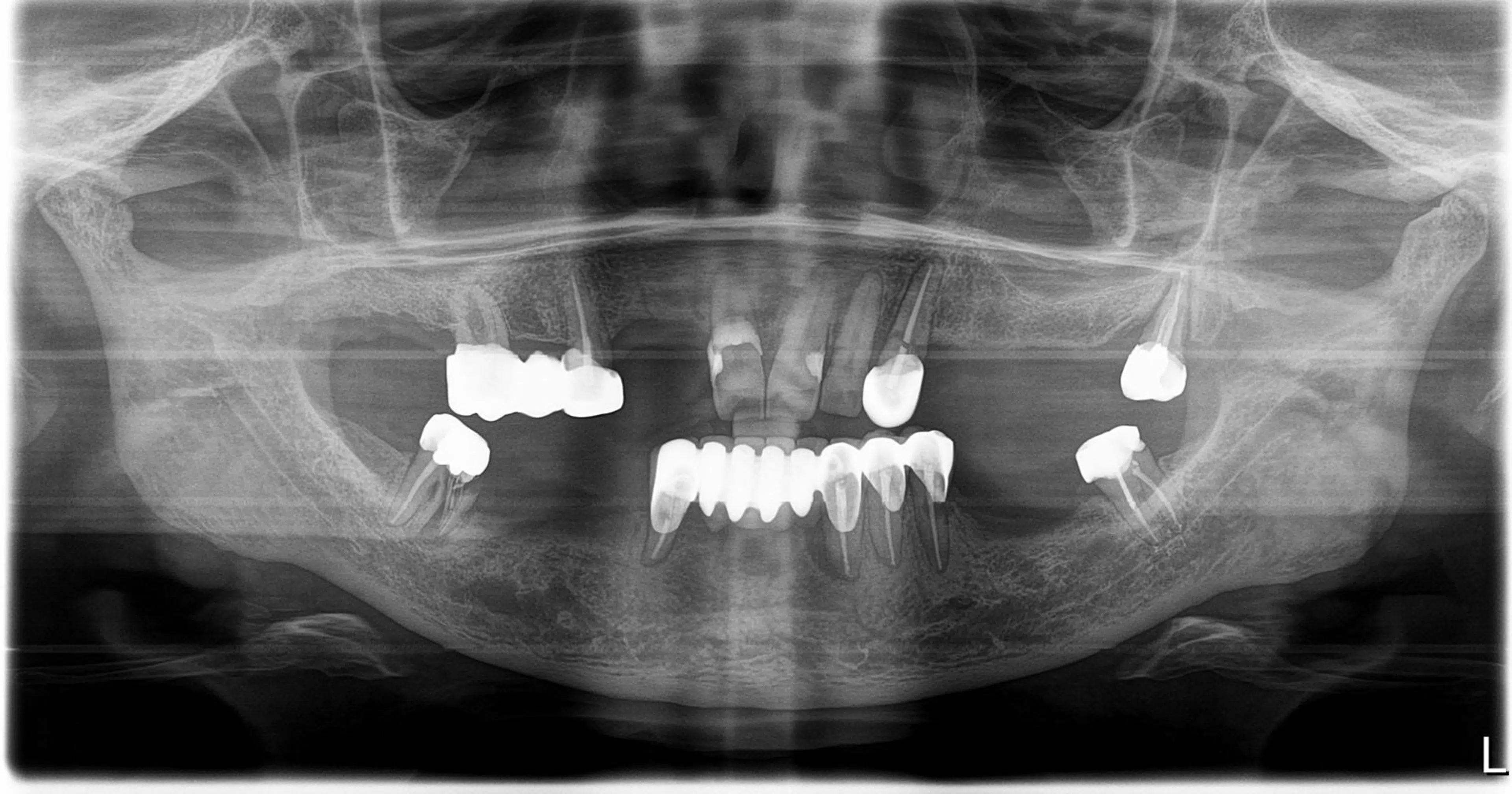
A clinical journey from difficulty chewing with failing removable partial dentures to a completed fixed implant-supported restoration.
Patient: 70-year-old woman | Treatment: Full-arch implant-supported fixed prosthetic rehabilitation
The patient’s concern
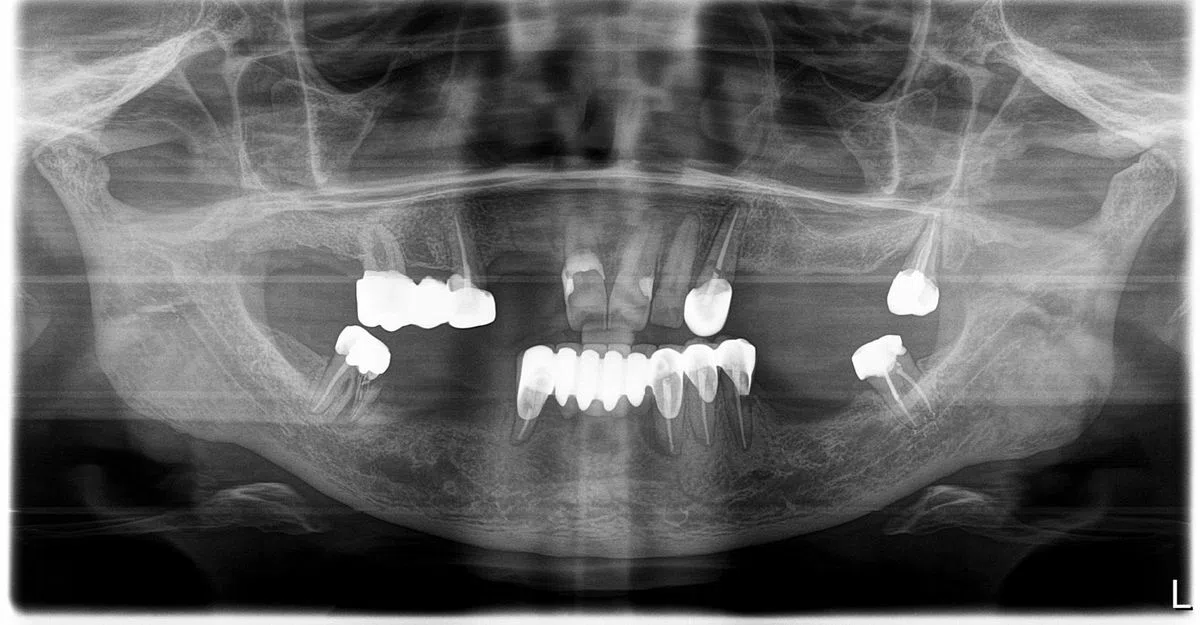
A 70-year-old woman visited Dantam Dental Care because she was finding it difficult to chew food comfortably. She had been using removable partial dentures, but the existing dentures and several of their supporting teeth were severely compromised. The remaining dentition included fractured teeth and damaged abutments, limiting the usefulness of her existing prostheses.
Clinical assessment and treatment planning
A comprehensive examination and panoramic radiograph (OPG) were used to evaluate the remaining teeth, existing restorations, and jaw anatomy. Given the extent of dental breakdown and the patient’s wish for a fixed solution, a full-arch implant-supported rehabilitation was planned for the upper and lower jaws. The plan was discussed with the patient, including the surgical and prosthetic phases, healing requirements, maintenance, and potential risks.
Surgical rehabilitation and healing
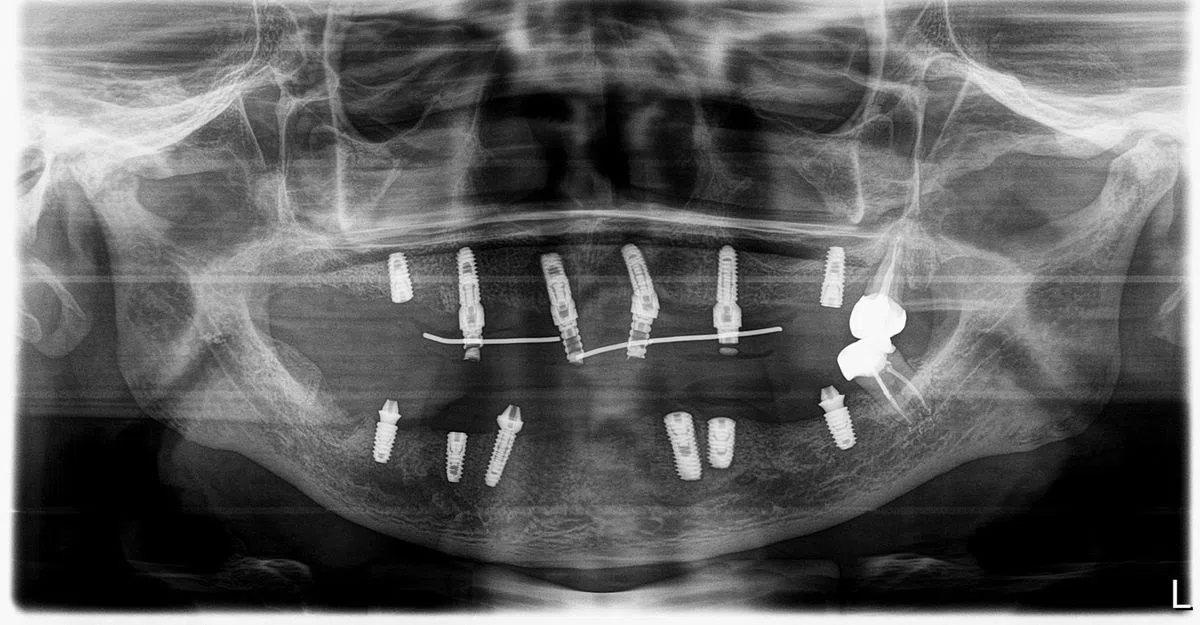
The treatment involved extraction of the teeth selected for removal and placement of dental implants in both jaws. The post-placement OPG shows six implants in the maxilla and six in the mandible. A healing period followed before the definitive prosthetic phase. The panoramic image documents implant distribution but, on its own, cannot establish osseointegration or long-term implant success.
Metal framework trial
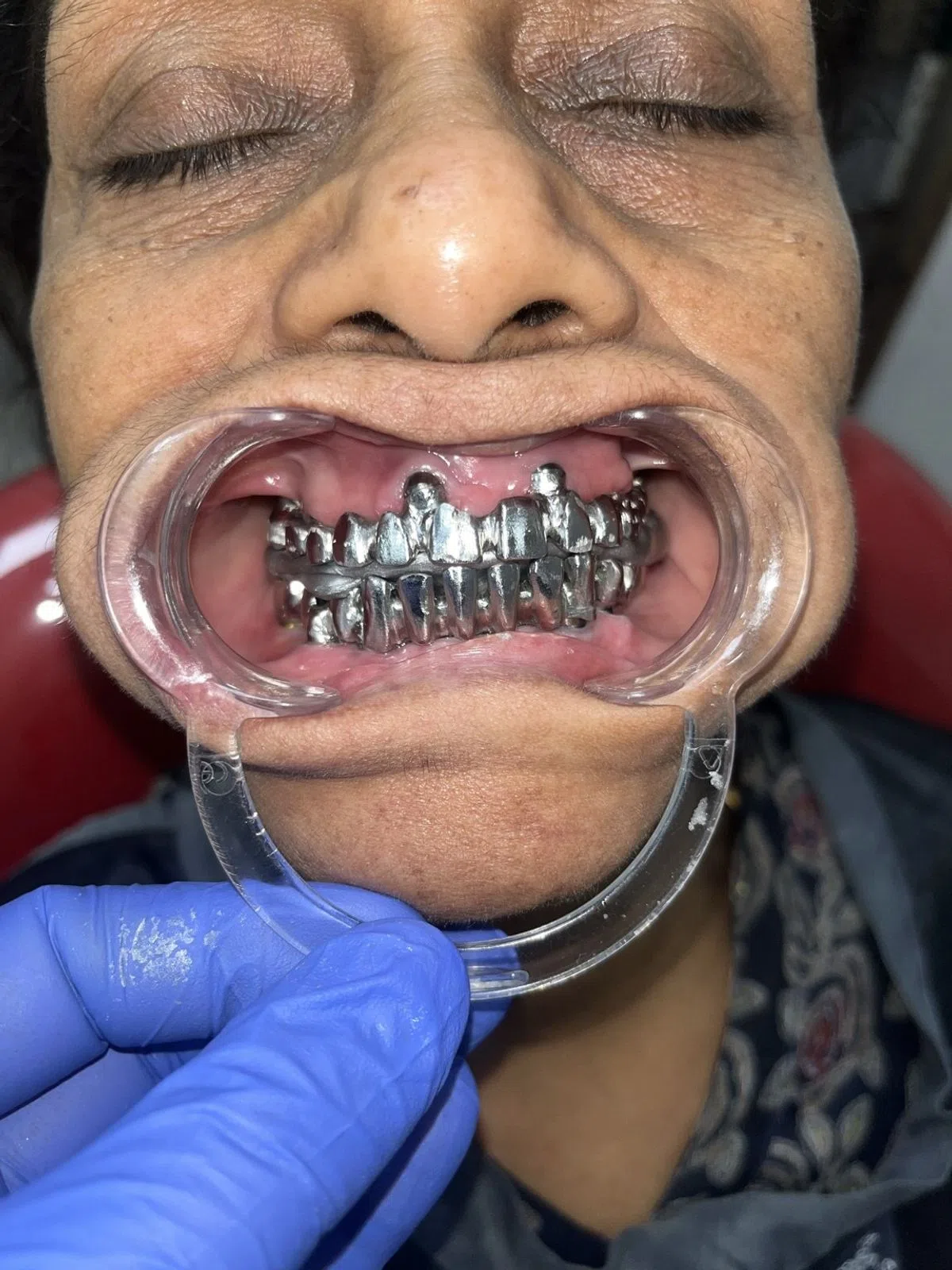
Following the healing and clinical evaluation phase, the case progressed to a metallic framework trial. This stage allows the clinician to evaluate the framework’s fit and prosthetic relationships before definitive restoration. The clinical photograph records the metal trial in both arches.
Delivery of the final restorations
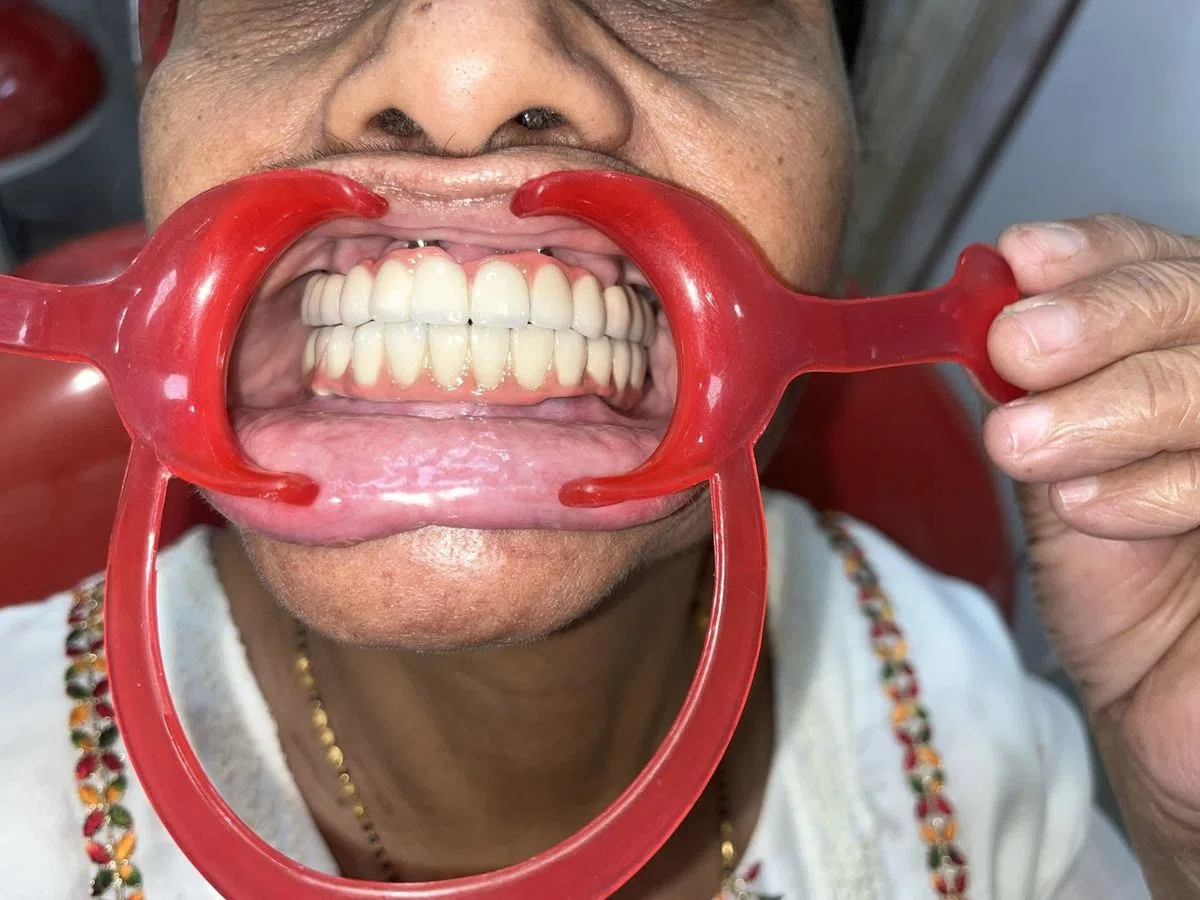
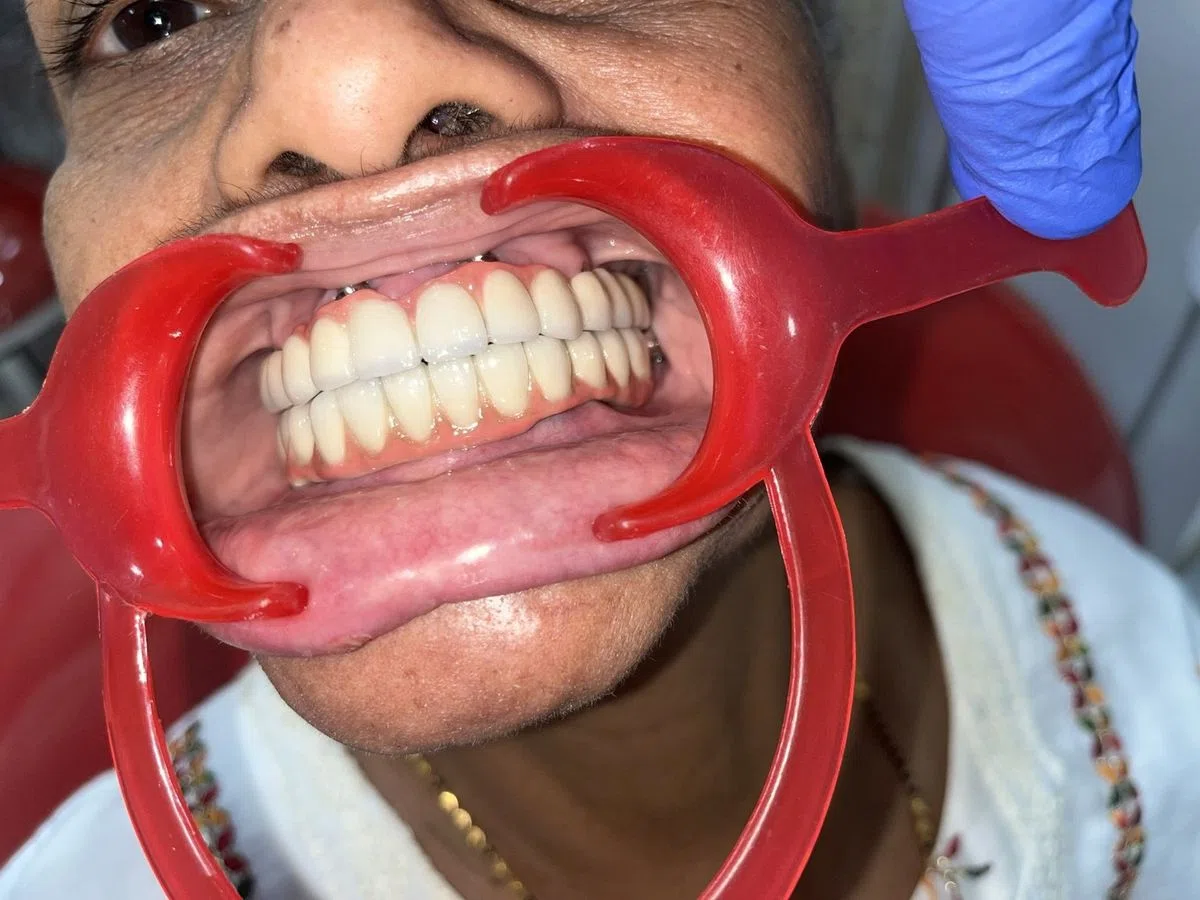
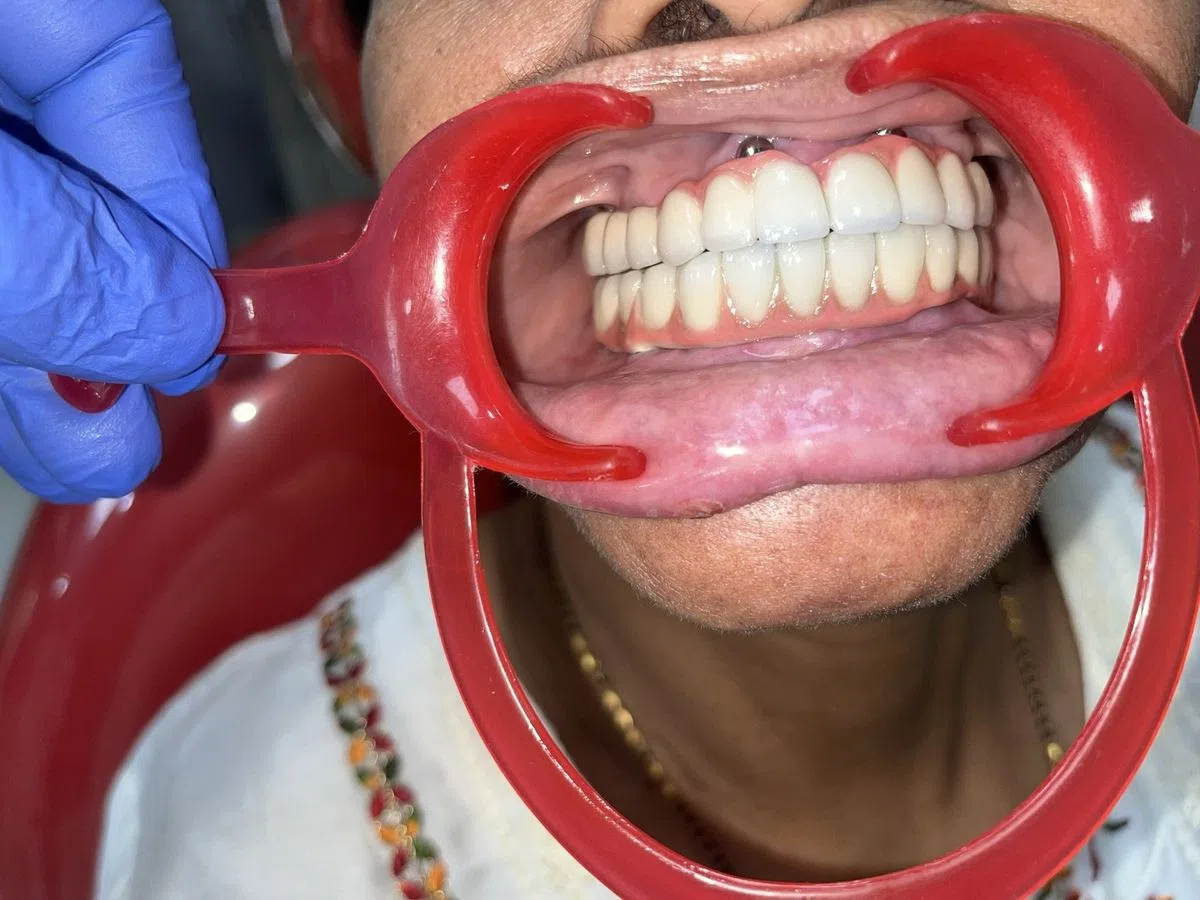
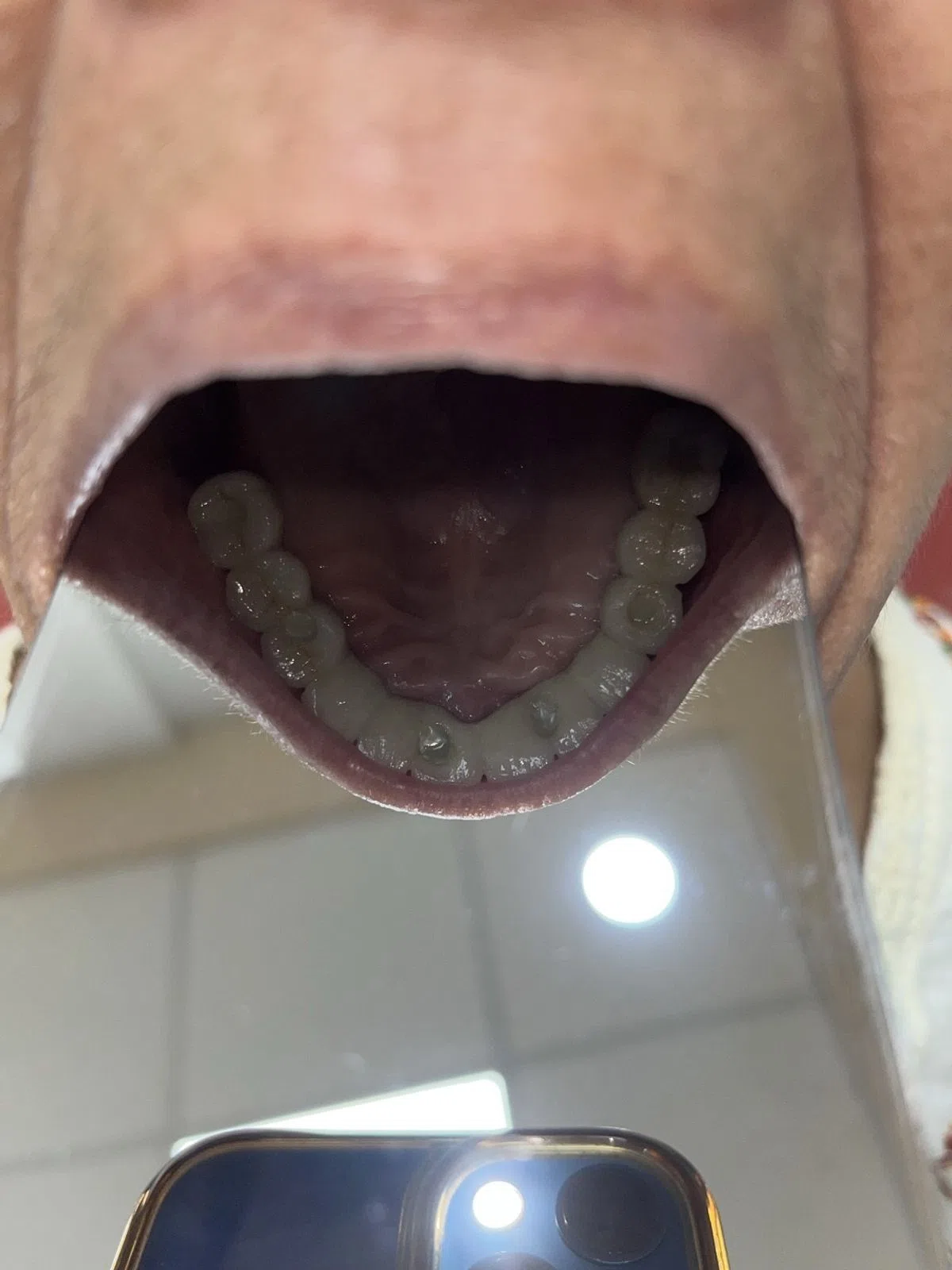
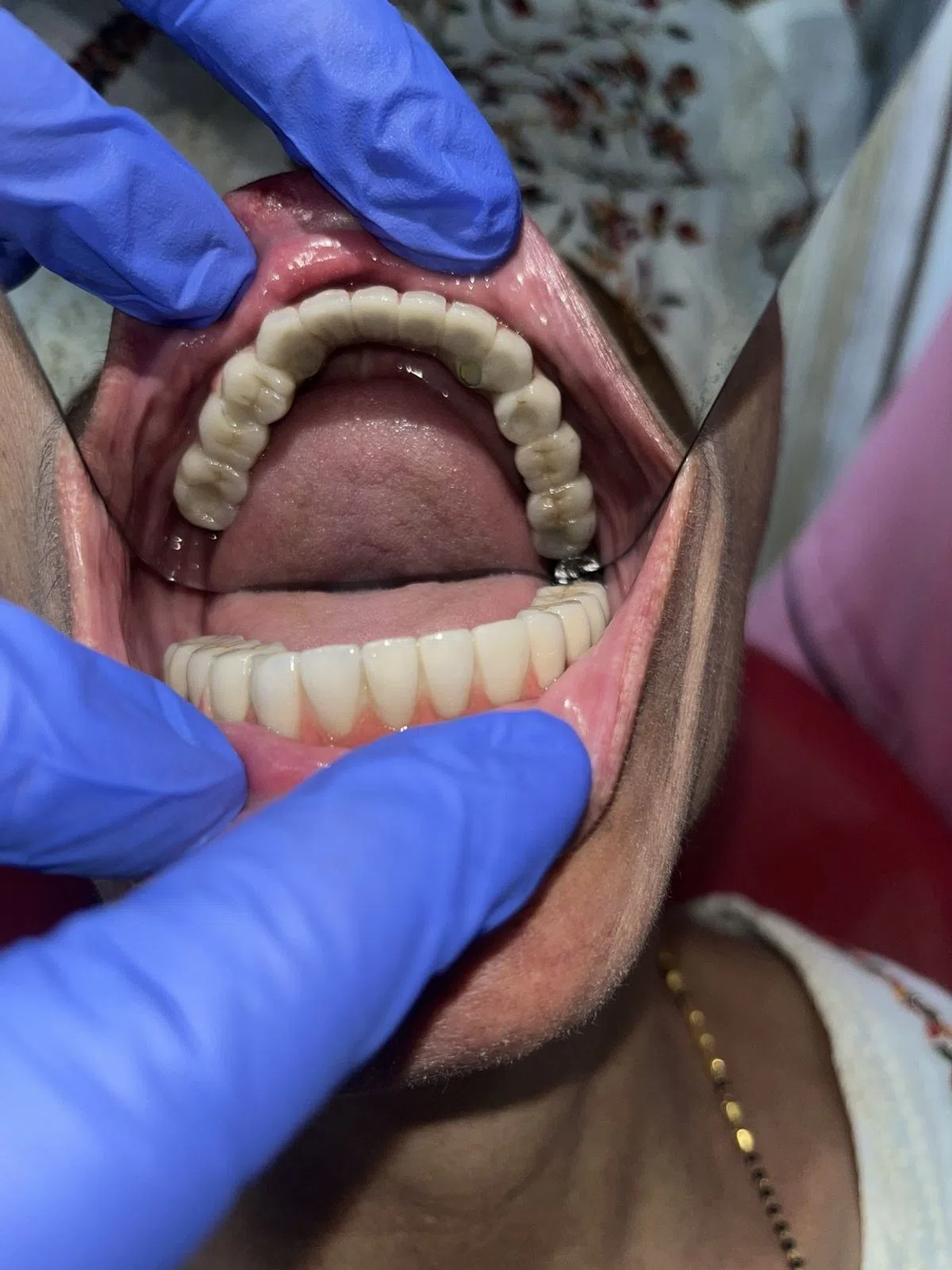
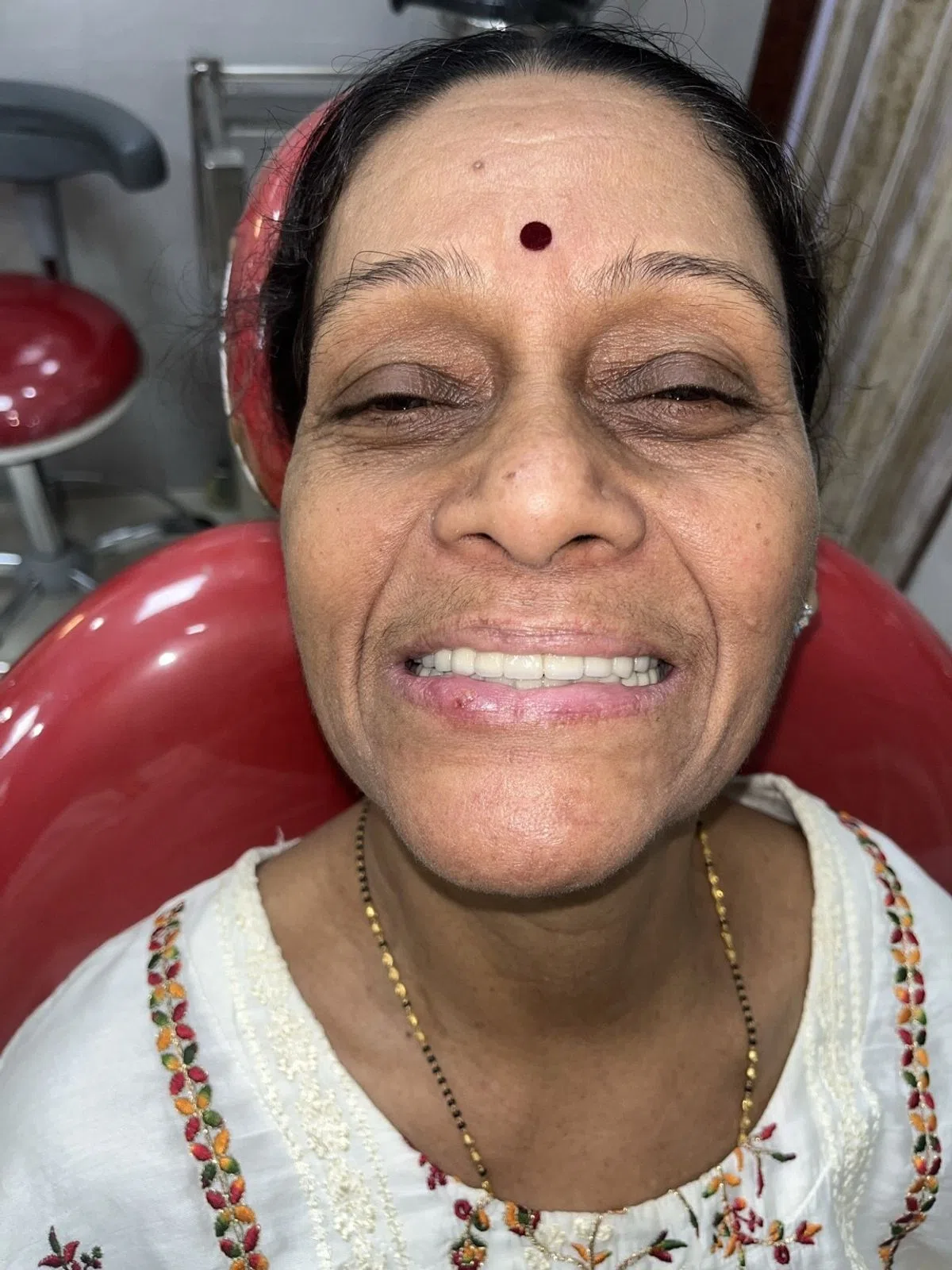
The final photographs show fixed, tooth-coloured full-arch restorations in the upper and lower jaws, with prosthetic gingival contours visible. The frontal and angled intraoral views illustrate the completed appearance, while the occlusal views document the arch forms and restorative surfaces.
Outcome and follow-up
The documented result is a completed fixed implant-supported prosthetic rehabilitation and a new smile. The patient originally sought care because chewing with her removable dentures had become difficult. Longer-term chewing comfort, implant stability, tissue health, and prosthesis performance should be evaluated at follow-up rather than assumed from photographs alone.
What patients can learn from this case
When multiple teeth and existing removable dentures are failing, full-arch implant-supported restorations may be an option for selected patients. Treatment suitability depends on bone anatomy, general health, oral hygiene, expectations, and a detailed clinical assessment. Fixed implant prostheses still require daily cleaning and periodic professional review.
Frequently asked questions
Can a 70-year-old patient be considered for full-mouth dental implants?
This case documents full-arch implant-supported rehabilitation in a 70-year-old woman. Suitability requires an individual assessment of bone anatomy, general health, oral hygiene, and expectations.
Why was a fixed implant-supported restoration planned in this case?
The patient had difficulty chewing with removable partial dentures, and several supporting teeth and existing dentures were severely compromised. After assessment and discussion of her wish for a fixed solution, rehabilitation of both jaws was planned.
How many dental implants were visible in this case?
The post-placement panoramic radiograph shows six implants in the upper jaw and six in the lower jaw. This describes the documented case; the image alone cannot establish osseointegration or long-term implant success.
What is the purpose of the metal framework trial?
Following healing and clinical evaluation, the metal framework trial allows the clinician to assess the framework's fit and prosthetic relationships before the definitive restorations are delivered.
Do fixed implant-supported teeth still require cleaning and follow-up?
Yes. Fixed implant prostheses require daily cleaning and periodic professional review. Follow-up is needed to assess chewing comfort, implant stability, tissue health, and prosthesis performance.